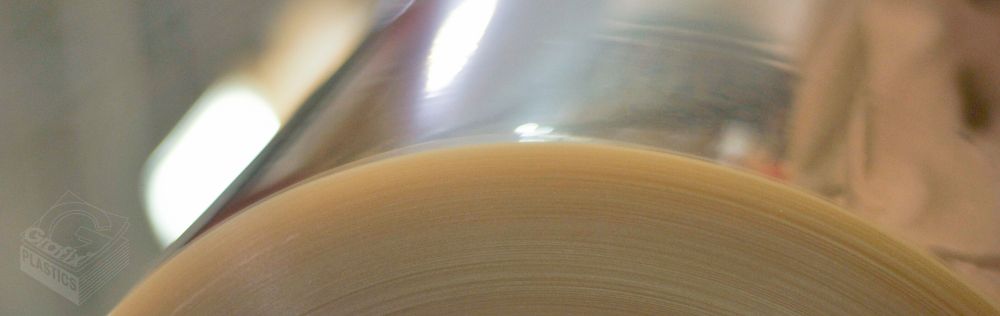
Did you know that the term “acetate” is often – erroneously – used to refer to ANY plastic film or plastic sheet? That’s probably because acetate has been around since before World War I! In truth, acetate is something more specific. Acetate sheets and film are made of a specific type of plastic material called cellulose acetate, which is made from natural sources like wood pulp and cotton.
As a polymer, acetate is very versatile. Not only is it used for making plastic sheets and film, but also for making tool handles, eyeglass frames, and as an component of many medical and food industry products.
Features of Acetate Sheets and Film
Grafix Acetate is a cellulose di-acetate polymer cast into film and flat sheets. It is optically clear and dimensionally stable, making it a great choice for applications whose products are subject to temperature and humidity changes. An industry leader for packaging, printing, graphic arts, overlays, and many other applications for more than 70 years, Grafix Acetate is a high performance, environmentally friendly choice for your film and sheeting needs.
Features
- Optical Clarity
- Low/Uniform Birefringence
- Lay Flat
- Printable
- 100% Biodegradable
- Recyclable with paper and plastic
- Heat Sealable
- Approved for direct food contact
- Dimensionally stable to 60°C
- No release of toxic gasses or heavy metals
- Fully dissolves in landfills
- Thermoformable
Types
Stock Finishes
- Clear
- Matte
Custom finishes:
- White, Colors
- Custom formulations and enhancements available
Standard Thicknesses:
- .003″/75um
- .005″/125um
- .0075″/180um
- .010″/250um
- .015″/325um
- .020″/500um
- .001″ & .002″/15um-50um – custom
*Not all finishes are available for every gauge and size
Are you using Acetate Rolls in an optical application? Check out our Optical Acetate Film page!
Stock
Master acetate rolls in stock:
- Thickness
- .003″/75um
- .005″/125um
- .0075″/180um
- .010″/250um
- .015″/325um
- .020″/500um
- .001″ & .002″/15um-50um – custom
- Finish
- Clear & Matte
- Clear & Matte
- Clear
- Clear
- Clear
- Clear
- Clear & Matte – custom
- Stock widths
- 25″ & 50″
- 25″ & 50″
- 25″ & 50″
- 25″ & 50″
- 50″
- 50″
- .001″ & .002″/15um-50um – custom
We stock a variety of gauges. Custom finishes, formulations and enhancements are available on a custom order basis – minimum quantities will apply.
Finished goods stock:
Acetate Sheets
| Sheets | 20 x 25″ | 20 x 50″ | 25 x 40″ | 30 x 40″ | |
|---|---|---|---|---|---|
| Clear | |||||
| .003″/75um | • | • | • | • | |
| .005″/115um | • | • | • | • | |
| .0075″/180um | • | • | • | • | |
| .010″/250um | • | • | • | • | |
| .015″/325um | • | • | • | • | |
| .020″/500um | • | • | • | • | |
| Matte- One Side | |||||
| .003″/750um | • | • | • | • | |
| .005″/100um | • | • | • | • | |
Acetate Rolls
| Rolls | 25″x12′ | 25″x25′ | 25″x50′ | 25″x100′ | 50″x12′ | 50″x 25′ | 50″x50′ | 50″x100′ |
|
|---|---|---|---|---|---|---|---|---|---|
| Clear | |||||||||
| .003″/75um | • | • | • | • | • | • | • | • | |
| .005″/115um | • | • | • | • | • | • | • | • | |
| .0075″/180um | • | • | • | • | • | • | • | • | |
| .010″/250um | • | • | • | • | • | • | • | • | |
| .015″/325um | • | • | |||||||
| .020″/500um | • | • | |||||||
| Matte- One Side | |||||||||
| .003″/750um | • | • | • | • | • | • | • | • | |
| .005″/100um | • | • | • | • | • | • | • | • | |
Acetate Packs
| Packs of 100 Sheets | 8 x 10″ | 8.5 x 11″ | 8.5 x 14″ | 9 x 12″ | 11 x 14″ | 11 x 17″ | 14 x 17″ | |
|---|---|---|---|---|---|---|---|---|
| Clear | ||||||||
| .003″/75um | • | • | • | • | • | • | ||
| .005″/115um | • | • | • | • | • | • | ||
| .0075″/180um | • | • | • | • | • | |||
| .010″/250um | • | • | • | • | • | |||
| .015″/325um | • | • | • | • | • | |||
| .020″/500um | • | • | • | • | • | |||
| Matte- One Side | ||||||||
| .003″/750um | • | • | • | |||||
| .005″/100um | • | • | ||||||
Specs
Properties are based on .005″/115um clear acetate film. Properties of other gauges and finishes can vary.
| Film Property | Value | Units | Test Method | ||
|---|---|---|---|---|---|
| Physical Properties | |||||
| Specific Gravity | 1.32 | ||||
| Equilibrium moisture content | |||||
| 23C and 50% RH | circa 2% | ||||
| Surface energy | 38-42 | dyn cm -1 | |||
| Areal density | 124.45 | g/m 2 | |||
| Yield | 8.04 | m 2 /kg | |||
| Dynamic friction coefficient | 0.4-0.6 | ||||
| Tensile Strength | 80-100 | Nmm -2 | ASTM D882 | ||
| Elongation at break | 25-45% | % | ASTM D882 | ||
| E-Modulus | 2000-2500 | Nmm -2 | ASTM D882 | ||
| Tear initiation | 0.237 | N | ASTM D1938 | ||
| Tear propagation | 0.231 | N | ASTM D1938 | ||
| Electrical Properties | |||||
| Surface resistivity 50% RH | 5.1×10 -13 | Ωm -2 | |||
| Dielectric breakdown | 15 | kVmm -1 | |||
| Thermal Properties | |||||
| Linear Shrinkage 115°C 10 min | 1-1.5 | % | |||
| Dimensional stability | |||||
| 20 hrs 80°C 95% RH | 0.0215 | % | |||
| Softening temperature | ≈ 120 | °C | |||
| Glass transition temperature | ≈ 140 | °C | |||
| Optical Properties | |||||
| Transparency | 90.4 | % | ASTM D1476 | ||
| Gloss | |||||
| 20° | 141.6 | % | ASTM D523 | ||
| 60° | 148.3 | % | BS 2782 520A | ||
| 85° | 123.7 | % | |||
| Haze | 0.9 | % | ASTM D1003 | ||
| BS 2782 521A | |||||
| Refractive Index | 1.485 | ||||
| Barrier Properties | |||||
| Moisture vapour transmission rate | gm -2 day -1 | ||||
| M.V.T.R. 25°C & 75% RH | 337 | ||||
| Food contact approved | |||||
| Din Certo EN 13432 certified | |||||
| BPI certified | ASTM D6400 | ||||
| Vincotte OK Home Compost approved | |||||
For more specific questions regarding Acetate Sheets and Film, please contact your Grafix sales representative today!
Important Notice: Grafix makes no warranties, express or implied, including but not limited to any implied warranty of merchantability of fitness for a particular purpose. The user is responsible for determining whether the Grafix product is fit for a particular purpose and suitable for the user’s method of application. Please remember that many factors can affect the use and performance of a Grafix Plastics film product in a particular application. Given the variety of factors that can affect the use and performance of a Grafix product, some of which are uniquely within the user’s knowledge and control, it is essential that the user evaluate the Grafix product to determine whether it is fit for a particular purpose and suitable for the user’s method of application.
Limitation of Remedies and Liability: If the Grafix product is proven to be defective, THE EXCLUSIVE REMEDY, AT GRAFIX’S OPTION, SHALL BE TO REFUND THE PURCHASE PRICE OF OR TO REPAIR OR REPLACE THE DEFECTIVE GRAFIX PRODUCT. Grafix shall not otherwise be liable for loss or damages, whether direct, indirect, special, incidental or consequential, regardless of the legal theory asserted, including, but not limited to, contract, negligence, warranty or strict liability.
Safety
Safety and Regulatory
- Acetate is DEHP, DBP, BPA and BBP free. Contact us for more details
- Acetate is RoHS Compliant. Contact us for more details
- Acetate is FDA approved for direct food contact. Contact us for more details
- Acetate meets MilSpec L-P-504E: Exceeds type I, meets type II
Unique Environmental and Food Safety Advantages
Acetate sheets and film are environmentally compatible with and FDA approved for direct food contact, making it a staple in the hospitality industry. It offers significant advantages over other packaging for bakery products that need to be packaged while still hot. Because acetate has a high moisture transmission ratio (WVTR), condensation passes through the film, ensuring the product remains fresh while eliminating condensation on the film surface. Acetate film also has excellent moisture permeability, which minimizes the risk of fogging in chilled display cabinets. Completely food-safe, acetate is perfectly suited for use in food packaging with no migration of unwanted chemicals into the products.
Grafix Acetate and the Environment
Grafix Acetate is also 100% biodegradable! All of acetate’s main components are produced from natural wood pulp and cotton, rather than fossil fuels. No food-based agriculture is used to make our acetate sheets and film; the wood pulp is sourced from SFI (Sustainable Forestry Initiative®) managed plantations, which typically plant more trees than are harvested to ensure no endangered hardwoods are used up.
Our acetate film and sheets are 100% petroleum-free and certified as 100% compostable. Acetate is categorized alongside paper and board for return and recovery purposes; it can be recycled, composted or incinerated without releasing any toxic chemicals.
Grafix Plastics has a strong commitment to supply materials that are environmentally-friendly. When you purchase Grafix materials that are biodegradable or compostable, you are helping to reduce the impact of these products on our environment.
Ask our experts if acetate film and sheets are right for your project.
Although acetate has many specific advantages over both polyester and PVC, these advantages do come at a price. Markedly more expensive and not as durable as its plastic counterparts, acetate may not be the best choice for certain applications. Our knowledge sales staff can help you determine if acetate is the right polymer to meet your needs. When you’re ready to connect with us, click start an inquiry.
Contact Grafix Plastic for more information on Acetate paper materials and much more!
In addition to supplying acetate sheets and rolls of film, we also offer a variety of other plastic film and sheets, available in a variety of thicknesses and finishes. Unsure which film product is right for your commercial or industrial application? Check out our extensive FAQ, which is full of answers to many of your materials questions!
If you’re ready to request a quote for our high-quality acetate sheets and film, use our start an inquiry form to contact one of our experts! Our team is standing by to answer your questions today!